By Millie Earle-Wright
Published: Jan 08, 2026More by Millie
Close
Articles by Year
- January 2026
- November 2025
- August 2025
- June 2025
- May 2025
- January 2025
- September 2024
- August 2024
- July 2024
- June 2024
- March 2024
- December 2023
- July 2023
- June 2023
- May 2023
- April 2023
- February 2023
- January 2023
- December 2022
- June 2022
- March 2022
- October 2020
- September 2020
- August 2020
- May 2020
- April 2020
- March 2020
- February 2020
- January 2020
- November 2019
- September 2019
- August 2019
- June 2019
- May 2019
- April 2019
- March 2019
- February 2019
- January 2019
- October 2018
- September 2018
- May 2018
- April 2018
- March 2018
- February 2018
- November 2017
- May 2017
- August 2016
- May 2016
- March 2016
- September 2015
- October 2014
Articles by Category


From Heather Hills to Coastal Blooms
Scotland’s diverse and beautiful flora reflects the country’s contrasts in climate, geology and elevation. In the warm months of spring, coastal machair blooms bright with wildflowers, and by summer, our hills are cloaked in swathes of purple heather. The cooler weather of autumn turns woodlands fiery shades of amber, orange and red, and in winter, frost-tipped pines offer shelter from the wind and snow.
Appreciating the natural wonders of our landscapes adds depth to any adventure, whether hiking in the Cairngorms National Park, relaxing on the wave-splashed shores of Skye or even exploring the stunning architecture of Edinburgh. Read on to discover more about our flora and fungi — from the habitats your clients will encounter while spending time here to the foraged flavours of Scotland’s natural larder, brought thoughtfully to their plate through local, seasonal cooking.
What Grows Where in Scotland?
In the Woodlands?
Scotland’s native woodlands encompass several forest types, including pine, birch, and mixed deciduous forest. As you spend time amongst our trees, whether cycling, walking, or enjoying a picnic, look out for wild cherries, tall Scots pine, silver birch and old leafy oaks. Perhaps the most precious of all are our ancient Caledonian pinewoods – Scots pines descended from the first pines to arrive in Scotland 11,000 years ago.
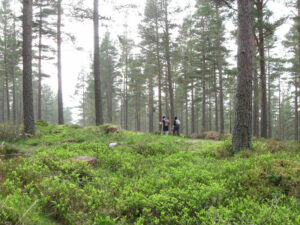
The Speyside Way
On the Moorland?
Vast, open moors and deep, peat-rich wetlands create some of Scotland’s most atmospheric landscapes. These waterlogged, acidic soils may seem inhospitable, but they support a remarkable range of plants. Here, carpets of spongy, brightly coloured sphagnum moss slowly build peat beneathfoot, while the silky heads of cotton grass shimmer in the wind.
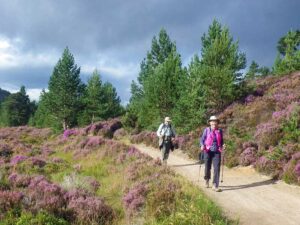
Walking in the Cairngorms
In the Mountains?
Spending time walking in Scotland’s mountains often reveals several species adapted to high, exposed ground. These alpine plants survive harsh winds and short growing seasons. As well as vibrant mosses and lichens, look out for tiny three-leaved rush (which can survive the hardest of frosts) and purple saxifrage, one of the northernmost flowering plants in the world.
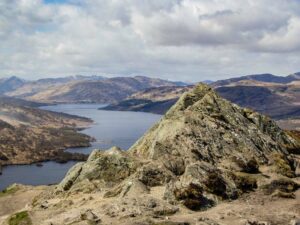
Loch Katrine from Ben A’an
In the Grasslands, Meadows & Machair?
Scotland’s grasslands are often overlooked, yet they are full of life and colour. From meadows to machair — a rare, fertile grassy plain found on the West Coast – these open habitats support a wide variety of grasses and flowers. While spending time by the sea, look for the wildflowers such as red clover and bird’s-foot-trefoil blooming in the machair, as well as ground-nesting birds like lapwings and curlews, quietly raising their young among the grasses.
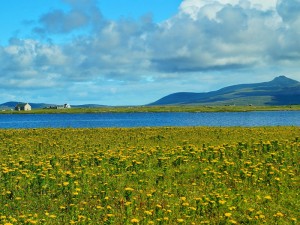
Machair in the Hebrides
On the Forest Floor?
Our forests are full of surprises, especially for those who take the time to look down. Scotland is home to over 12,000 species of fungi and more than 1,500 species of lichen. The more you learn about them, the more fascinating they become, not least because they have some of the most aptly chosen names in the natural world. While here, keep an eye out for: beefsteak fungus, dead man’s fingers, jelly ear, shaggy parasol and yellow brain – you’ll know them when you see them.
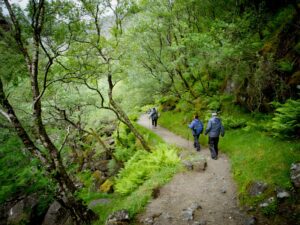
Glen Nevis
What Not To Miss – Seasonal Plant Spectacles
Swathes of Bluebells

Few sights are as lovely as a carpet of violet bluebells spread out beneath old trees. Luckily, Scotland’s woodlands offer some of the most breathtaking displays of this much-loved wildflower. In the language of flowers, the bluebell is a symbol of humility, constancy, gratitude and everlasting love. Long woven into folklore, bluebells are also associated with dark magic, with stories warning that anyone who picks one may become disoriented and lose their way in the woods. Best seen in April and May, this seasonal woodland display is a highlight of springtime in Scotland.
Hills of Heather
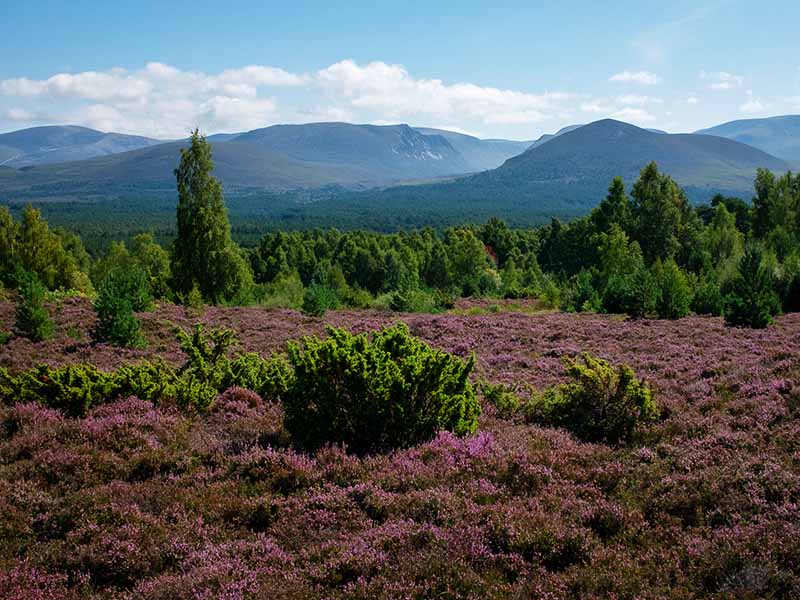
Few plants are as closely associated with Scotland as heather, which grows freely across hillsides, glens and open moorlands. From late summer into early autumn, its flowers bring incredible colour to these wild places, cloaking the ground in rich hues of purple, lilac and pink. From the vast plateaus of the Cairngorms National Park to the sweeping moors of Perthshire, heather adds character and colour all over Scotland. Whether driving through the Highlands or enjoying a gentle wander through the countryside, it’s always a joy to be surrounded by this hardy and beloved plant.
Snowdrops of Spring
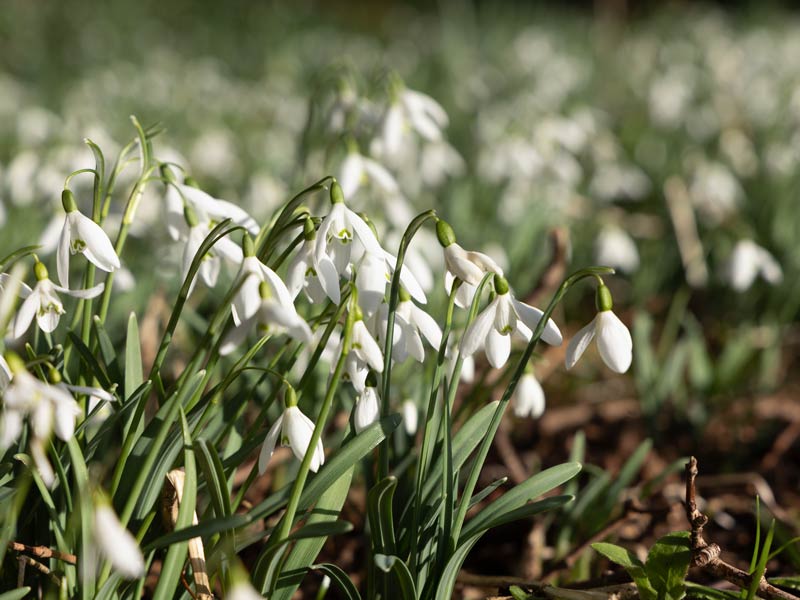
Long before new buds appear on the trees, delicate white snowdrops push up through the frosted ground – the first sign of spring. Although not technically a native plant, the snowdrop is widely naturalised and can be seen in broadleaved woodland, along riverbanks and in churchyards. Many of Scotland’s botanical gardens, castles and National Trust properties are perfect places to see these magical flowers in abundance, which are also known by their common names, ‘Fair Maids of February’ and ‘Little Sister of the Snows’. A sure sign that the days are lengthening, snowdrops are a sign of hope and new beginnings.
Wild Cotton-Grass
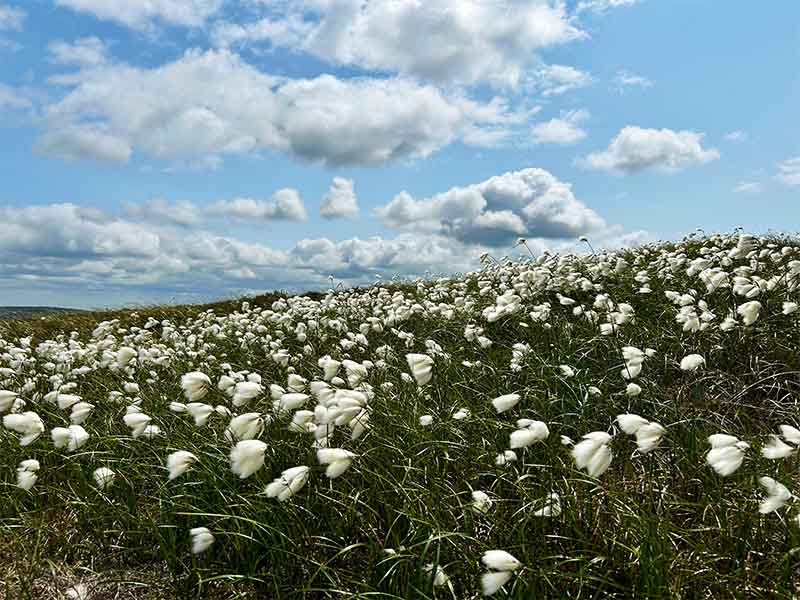
Neither cotton nor grass, common cotton-grass is a familiar sight across Scotland’s open hillsides, wild moorlands and blanket bogs. Also known as ‘bog cotton’ and ‘ghost grass’, its small, somewhat unremarkable flowers develop into soft, white seedheads that sway like scattered tufts of wool throughout the summer, catching the light and moving gently in the breeze. Often found growing among sphagnum moss and along the edges of dark pools, shimmering cotton-grass pairs perfectly with fresh wind, big skies and wild open spaces. An ethereal flower, fleecy white and soft to the touch, your clients won’t miss this beautiful plant when walking in our National Parks or across the lonely moors.
Wild Food and Foraging in Scotland
Foraging is a relaxing and absorbing way to get up close to nature, spend time outdoors, and enjoy delicious ingredients gathered by your own hand. Luckily, Scotland has a fantastic wild larder, and it is possible to forage all year round. Whether on a guided foraging walk exploring the history, folklore and practical uses of everyday plants, or while plucking a handful of raspberries from a nearby hedgerow, foraging has a quiet way of fostering a deeper connection to the landscape.
Read on to discover what foods your clients might find on an adventure in Scotland.
Scottish Berries
It’s always lovely foraging for berries, perhaps because you can enjoy them right off the bush. Blackberries, the fruit of the thorny bramble, are popular for use in pies, crumbles, wines, jam and jellies, while sloes, the inky fruit of blackthorn trees that blossom with delicate white flowers in early spring, are best known for their use in sloe gin and are often picked after the first frost. Wild raspberries are also common across Scotland, glowing pink among a tangle of stems. You’ll know the berries are ripe when they pull easily away from the core.
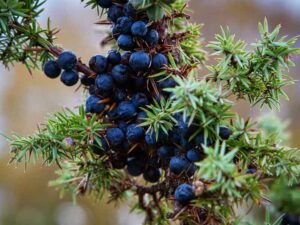
Berries
Mushrooms of the Forest
Scotland’s woodlands are home to dozens of species of edible mushroom, though only a few are commonly gathered for the kitchen table. Among the most sought-after are penny buns and chantarelles. The penny bun, also known as a cep, is a sturdy mushroom with a cap like a well-baked bun. They generally grow in groups of two or three and are delicious when fried with a generous dollop of butter. Chanterelles, with their golden, trumpet-shaped caps, appear at summer’s close. With their delicate flavour, chanterelles are delicious lightly sautéed with garlic and stirred through fresh pasta.
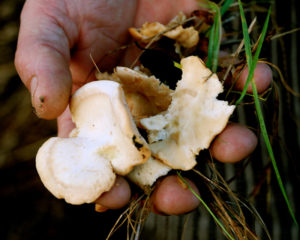
Foraging for wild mushrooms
Seaweed & Shellfish
Is there anything more relaxing than wandering along the shoreline, peering into tide pools in search of wild food? Scotland’s coastline offers an abundance of treasures: dulse, kelp, sea lettuce, samphire, and razor clams buried in the sand. Mussels cling in sheltered crevices, ready to be cooked on the beach or in a cosy cottage kitchen. Served with a hunk of homemade bread, a steaming bowl of fresh shellfish elevates any adventure by the sea.
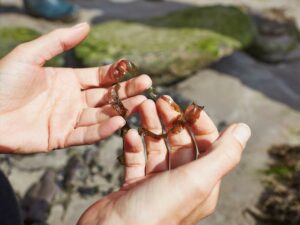
Foraging Seaweed
Foraged Greens of the Fields and Forests
Our woodlands and hedgerows are teeming with nourishing, edible plants. Nettle leaves are a versatile superfood, perfect for tea, added to a hearty soup, or incorporated into a stir-fry. Fat hen, also known as wild spinach, is another common and highly nutritious plant that was once a staple in our ancestors’ diets. Its tender leaves can be used much like cultivated spinach, in sautés, omelettes, or even as a vibrant addition to a fresh salad. Gathering, preparing, and cooking wild foods allows a hands-on experience of the landscape, bringing the flavours of hedgerows and woods straight to the table.
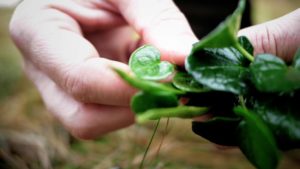
Foraging
